THREE:This concession, though deemed by the Home Government a large one, did not satisfy the Canadians. They took it as an instalment, but gave no pledge to make the return that was sought, by liquidating the arrears. In their answer to the Governor they said, "The great body of the people of this province, without distinction, consider the extension of the elective principle, and its application to the constitution of the Legislative Council in particular, and the repeal of the Acts passed in Great Britain on matters concerning the internal government of the province, as fully within the jurisdiction of the provincial Parliament, as well as the privileges conferred by such Acts; and the full and unrestrained enjoyment on the part of the legislature and of this House of their legislative and constitutional rights, as being essential to the prosperity and welfare of his Majesty's faithful subjects in Canada, as well as necessary to insure their future confidence in his Government, their future contentment under it, and to remove the causes which have been obstacles to it." Mr. Roebuck had become their champion and paid agent in the British House of Commons, and one of their first acts was to insert the agent's bill for the amount of his expenses (¡ê500) in the public accounts. This the Government refused to sanction, whereupon the Assembly took it upon them to pass it themselves without such sanction. The temper exhibited on both sides in these proceedings indicated no sign of a fair prospect of conciliation between the ruler and the ruled, more especially as the British Government exhibited anything but a conciliatory spirit. The discontent and agitation went on increasing during the following year. The Assembly rose in its demands, still persisting in refusing to vote the supplies. They required that the "executive council" of the Governor should be subjected to their control, and that their proceedings should be made public. The Assembly, in fact, had become quite refractory, owing to the violent measures of the democratic party, led on by Papineau, the Canadian O'Connell.The earliest statistics by which the progress of popular education may be measured are contained in the Parliamentary returns of 1813, when there were in England and Wales nearly 20,000 day schools, with about 675,000 scholars, giving the proportion of 1 in 17 of the population. There were also 5,463 Sunday schools, with 477,000 scholars, or 1 in 24 of the population. Lord Kerry's Parliamentary returns for 1833 showed the number of day schools and scholars to be nearly doubled, and the proportion to be 1 in 11 of the population. The Sunday schools, during the same period, were trebled in number, and also in the aggregate of children attending; while their proportion to the population was 1 in 9¡ªthe population having in the interval increased 24 per cent., the day scholars 89 per cent., and the Sunday scholars 225 per cent. Up to this time (1833) the work of education was conducted by private liberality, incited mainly by religious zeal, and acting through the agencies of the two great societies, the British and the National. In that year Government came to their aid, and a meagre grant of ¡ê20,000 a year continued to be made till 1839, when it was increased to ¡ê30,000. This was shared between the two societies,[426] representing two educational parties. The principle of the British and Foreign School Society, chiefly supported by Dissenters, was, that the Bible should be read without note or comment in the schools, and that there should be no catechism admitted, or special religious instruction of any kind. The schools of the National Society, on the other hand, were strictly Church schools, in which the Church Catechism must be taught. The total number of schools in 1841 was 46,000, of which 30,000 were private. These statistics indicate an immense amount of private energy and enterprise, the more gratifying from the fact that the greater portion of the progress was due to the working classes themselves. Great improvements had been effected in the art of teaching. Both the British and the National Societies from the beginning devoted much attention to the training of efficient teachers. In 1828 the former sent out 87 trained teachers; in 1838 as many as 183. The National Society commenced a training institution in 1811, and after forty years' progress it had five training colleges, sending out 270 teachers every year.
FORE:In pursuance of this convention the garrison retired, and began their fatal march on the 6th of January, 1842. The army consisted of 4,500 fighting men, with 12,000 camp-followers, besides women and children. The snow lay deep upon the ground; they had scarcely commenced their march when they were attacked by the Afghans, the guns were captured, and they were obliged to fight their way, sword in hand, defending the women and children as well as they could. During the whole way through the snow the road was strewn with bodies and stained with blood. The dead and dying were immediately stripped naked by the enemy, and their corpses hacked to pieces with long knives. During all this time the perfidious Akbar Khan sent messages, professing his regret at not being able to restrain the Ghilzai tribe; and after they had got through the Pass, he made a proposal, which was accepted, to take the ladies under his protection. Accordingly, Lady Sale and Lady Macnaghten, with six others, accompanied by their husbands, were left under his charge. The British troops then halted for a day, bivouacking on the snow. The cold was so intense that the Sepoys became benumbed and paralysed, in which state the whole of them were next day attacked and cut to pieces. The Europeans managed to hold together, but when they arrived at Jugduluk, thirty-five miles distant from Cabul, only 300 out of 16,500 persons who left that city remained alive. At this place a halt was ordered, and through the interference of Akbar Khan the miserable remnant were permitted to occupy a ruined enclosure, where, worn out by fatigue and utterly helpless, they lay down to rest in the snow. General Elphinstone was detained a prisoner by Akbar Khan in a small fort, whence he dispatched a note to Brigadier Anketell, advising him to march that night, as there was treachery afoot. The wearied band, aroused from their slumbers, accordingly moved on in the dark; but their departure was noticed, they were attacked in the rear, they broke into disorder, threatened to shoot their officers, separated in small parties, and thus, scattered and confused, they were cut down almost to a man. Of the officers, however, a considerable number escaped on horseback; but they, too, were attacked wherever they appeared, until only one gentleman, Dr. Brydon, survived to tell the dreadful story, reaching Jelalabad on the 13th of January. It afterwards came out, however, that several other officers were detained in captivity.From Cuddalore, Tippoo and Bussy, the French general, turned their forces against Wandewash; but they were met by Coote, though he was now sinking and failing fast. They retreated, and he attempted to make himself master of the strong fort of Arnee, where much of the booty of Hyder was deposited; but Hyder made show of fighting him whilst Tippoo carried off all the property. Tippoo was obliged to march thence towards Calicut, where the Hindoo chiefs, his tributaries, were joining the British under Colonel Mackenzie. Hyder at this moment was confounded by the news of the peace made by Hastings with the Mahrattas, and expected that those marauders would speedily fall on Mysore. His health was fast declining, and yet he dared not introduce his allies, the French, into his own territory, lest he should not so readily get them out again. Besides[332] his suspicions of the French, he had constant fears of assassination. Hyder died in December, 1782.
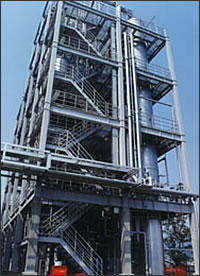
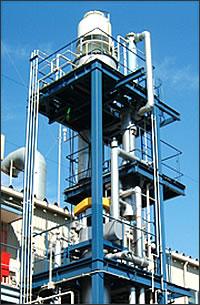
Methanol refinement systems, amyl alcohol refinement systems, ethanol refinement systems, hexanol distillation systems, propanol refinement systems, cyclohexanol distillation systems, isopropanol dehydration systems, ethylene glycol recovery systems, and butanol distillation systems.
FORE:Some faint endeavours were made to shake off the yoke. Encouraged by France, they summoned the Turks to their aid and cut to pieces several detachments of the Russians. They proclaimed Poniatowski deposed, and called on the people to aid them to drive out the invaders. But the people, long used to oppression from their own lords, did not answer to the call. In France, Choiseul had been hurled from power, and France left the Poles to their fate. It was now that Frederick of Prussia proposed to Austria to combine with Russia and share Poland between them. At this robber proposition, so in character with Frederick, who had all his life been creating a kingdom by plundering his neighbours, Maria Theresa at first exclaimed in horror. But she was now old and failing, and she gave way, declaring that, long after she was dead and gone, people would see what would happen from their having broken through everything which had, till then, been deemed just and holy. Frederick of Prussia took the surest way to compel the Austrians to come in for a share of the spoils of Poland. He marched a body of soldiers out of Silesia¡ªthe territory which he had rent from Austria¡ªinto Posen, and Austria, not to be behind, had marched another army into the Carpathian Mountains.
Hexane distillation systems, tall oil distillation systems, benzene distillation systems, lubricating oil refinement systems, xylene-free distillation systems, low-boiling gas distillation systems, ethylbenzene recovery systems, fusel oil distillation systems, naphthalene distillation systems, propylene recovery systems, and turpentine oil distillation systems.
FORE:The news of the approach of the French succours was brought by Lafayette, who, much to the joy of Washington, and of America generally, again reached the States, landing at Boston in April. He announced that the fleet, commanded by the Chevalier de Ternay, consisted of seven sail of the line, with numerous smaller vessels, and brought over six thousand troops, under the Comte de Rochambeau. The French squadron reached Rhode Island on the 13th of July. Washington thereupon declared himself ready for an attack on New York; but Rochambeau replied that it would be better to wait for the expected and much larger fleet of De Guichen. Before De Guichen appeared, the English admiral, Graves, arrived, with six ships of war, thus increasing the English superiority at sea, and De Ternay found himself blockaded in the harbour of Newport, and Rochambeau was glad to entrench himself on Rhode Island, and abandon all idea of attacking New York. Sir Henry Clinton, on his part, planned an attack on Rochambeau with the army, while the French fleet blockaded in Newport harbour should be attacked by Admiral Arbuthnot. But Clinton and Arbuthnot were at variance, and the admiral did not promptly and cordially second the views of Clinton. He went slowly round Long Island, to place himself in conjunction with the general; whilst Clinton embarked eight thousand troops, and approached the position of Rochambeau. But Arbuthnot strongly contended against the attempt, declaring Rochambeau too formidably fortified, and Washington, at the same time, advancing from his position with a large force, suddenly passed the North River and approached King's Bridge, as if meditating an attack on New York. These circumstances induced Clinton reluctantly to return to New York. Washington retreated to his old ground at Morristown, and Arbuthnot remained blockading De Ternay before Newport. Neither party, therefore, could do more than be still for the remainder of the season. Clinton was completely crippled for any decisive action by the miserable modicum of troops which the English Government had furnished him, and the enemy now knew that the fleet of De Guichen was not likely to arrive this season.[523]
Ether distillation systems, camphor distillation systems, epichlorohydrin distillation systems, aniline distillation systems, dioxane refinement systems, acetonitrile distillation systems, furfural refinement systems, formalin distillation systems, cyclohexane distillation systems, monoethanolamine rectification systems, polyglycol ether distillation systems, dimethylformamide recovery systems, acrylic glycol ether distillation systems, acrylonitrile refinement systems, acetone recovery systems, pyridine distillation systems, methyl ethyl ketone recovery systems, picoline distillation systems, methyl isobutyl ketone recovery systems, and acetaldehyde recovery systems.